
There are moments in tech history where you can feel the voltage in the air—where innovation isn’t happening in labs only, but in bedrooms, living rooms, garages, and tiny local computer clubs. The early 1980s were exactly that.
And right at the epicenter of that storm was Commodore: a company that didn’t just ship machines, it helped ignite a worldwide wave of makers—kids typing BASIC at night, magazines packed with code listings, floppy disks traded like treasure, and an ecosystem of games and software exploding faster than anyone could predict.
That wasn’t luck.
That was strategy—vertical strategy—executed with ruthless clarity by one man: Jack Tramiel.
1) Who is Jack Tramiel?

Jack Tramiel wasn’t the “visionary CEO” stereotype. He was something more dangerous: a relentless operator who understood that in technology, the winner isn’t always the smartest inventor—it’s often the person who controls the bottlenecks.
He drove Commodore with a simple but explosive belief: build “computers for the masses, not the classes.”
And he didn’t mean it as a slogan. He meant it as a business weapon: drive prices down, ship at scale, and make the home computer feel inevitable.
In the early 1980s, that mindset helped make Commodore the most successful home-computer company on the planet—at the exact moment Tramiel’s departure would shock the industry.
2) Vertical strategy isn’t “control.” It’s friction removal.
When people say “vertical integration,” many imagine bureaucracy and empire-building. Tramiel’s version was the opposite: it was about removing friction at the points where friction kills growth.
Vertical strategy, in this context, means:
- fewer critical dependencies
- more control over cost and supply
- faster iteration because decisions and constraints are understood end-to-end
- the ability to wage price wars and survive them
In the home-computer era, the bottlenecks were brutal: chips, manufacturing capacity, supply continuity, and the ability to hit a price point that made families say, “Okay… we can actually buy this.”
Tramiel’s genius was seeing that this was not a “marketing problem.” It was an industrial problem.
3) MOS Technology and the 6502: a lever disguised as a chip
Now the plot twist: Commodore didn’t just buy chips. It went and bought the chipmaker.
The MOS 6502 became legendary because it helped make computing dramatically more affordable, and it spread into a wide range of iconic systems.
But the bigger strategic move is that Commodore acquired MOS Technology—bringing a key part of the value chain under its roof.
That’s vertical strategy in its purest form: turning what would normally be a supply risk into a competitive advantage. It meant Commodore could push costs down, secure access, and design hardware with manufacturing realities in mind—because those realities were their own.ks like when it’s real: not theory, not positioning—leverage you can feel in your unit economics.
4) The VIC-20: the on-ramp that made computing feel normal
Before the Commodore 64 became a worldwide icon, the VIC-20 kicked the door open.
It became the first computer of any description to sell one million units, eventually reaching about 2.5 million—numbers that, for the time, were absolutely seismic.
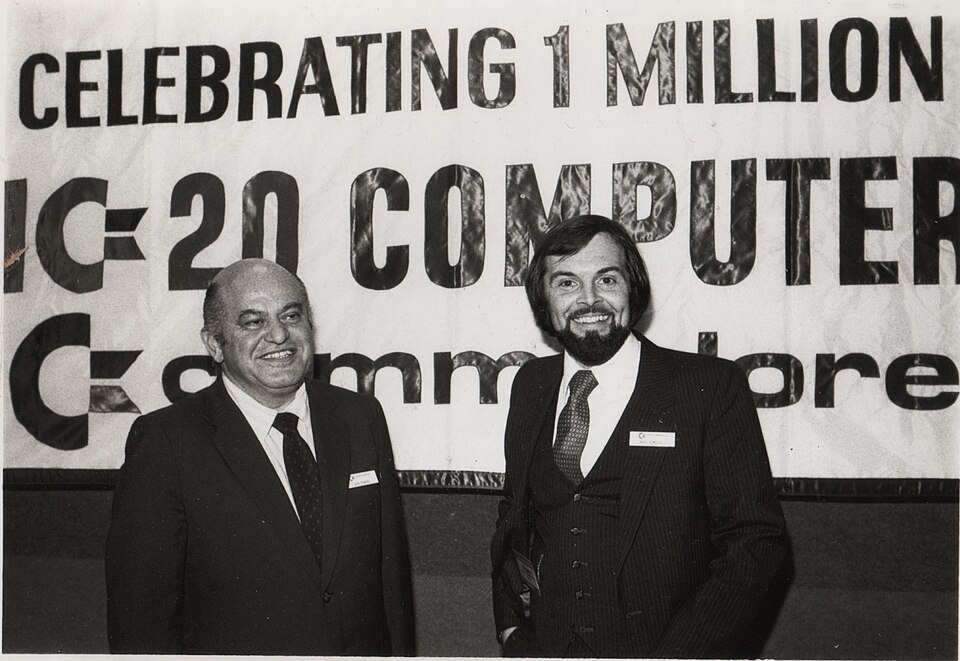
This matters because it proves the strategy worked: Commodore didn’t just create a product; it created a habit—the idea that a computer could belong in an ordinary household.
The VIC-20 wasn’t only an entry-level machine. It was a cultural on-ramp.
5) The Commodore 64: record sales, Guinness glory, and an ecosystem on fire
Then came 1982. And then came the machine that still feels like a historical mic drop:
The Commodore 64.
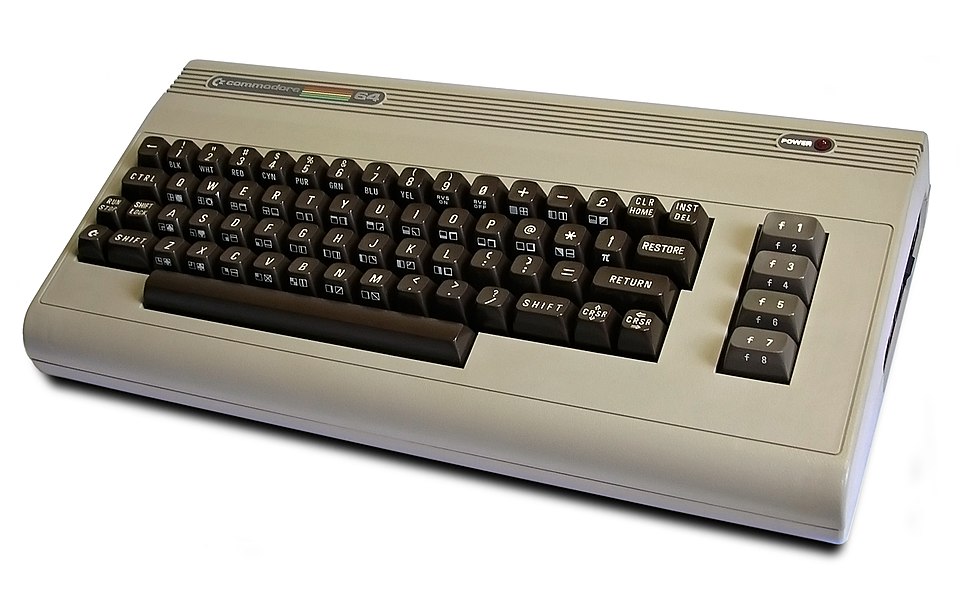
It’s widely listed (including by Guinness recognition) as the best-selling desktop computer model of all time, with estimates commonly placed between 12.5 and 17 million units.
Read that again: millions upon millions of a single model—shipped into homes across continents.
And the sales curve itself tells the story of momentum: the C64 went from hundreds of thousands to millions per year, including a huge spike in the mid-80s.
This is what vertical strategy can do when it hits the market’s nerve:
- aggressive pricing
- scalable production
- a machine designed to delight users (especially gamers)
- and a rapidly expanding library of software that made the computer feel “alive”
The C64 didn’t just sell. It multiplied.
6) The bold move that supercharged the movement: shipping knowledge with the machine
Here’s the part that still feels rebellious even today.
Commodore didn’t treat the computer as a sealed appliance. It treated it as a system you could learn.
The Commodore 64 Programmer’s Reference Guide famously included a large fold-out schematic diagram identifying ICs and circuit pathways—basically an official invitation to understand the machine deeply.
This wasn’t just documentation. It was permission.
And permission is rocket fuel for a creator culture.
7) The home-computer explosion: magazines, type-ins, and the early maker internet
This is where the era turns from “successful product” into “mass movement.”
People learned by doing—often in the most hardcore way imaginable: typing programs directly from magazines, line by line, character by character.
To help users avoid the inevitable typo-induced disasters, publications even shipped tools like The Automatic Proofreader, a checksum utility originally published for the VIC-20 and Commodore 64, designed specifically to verify type-in BASIC lines.
So picture it:
- a kid hunched over a keyboard,
- magazine open,
- typing code,
- comparing checksums,
- fixing errors,
- learning logic and debugging… without even realizing they were learning the foundations of software engineering.
Then the social layer:
- bulletin boards
- clubs
- trading disks
- sharing tricks
- discovering that “under the hood” wasn’t forbidden—it was the whole point
And on the more extreme edge, creative communities began pushing the hardware beyond intended limits—what later became strongly associated with the demoscene ethos: building from scratch and squeezing impossible effects out of limited machines.
This wasn’t consumption. This was participation.
8) The peak: when Commodore becomes a financial powerhouse
The results weren’t just cultural—they were financial.
By the year ending June 30, 1984, Commodore’s annual revenue is widely reported around $1.267 billion, with net income around $143.8 million.
That’s not “a nice win.” That’s podium-level dominance.
This is the moment where Tramiel’s approach looks unstoppable: vertical control, mass-market pricing, and an ecosystem that keeps expanding because the platform is everywhere.
9) The fracture: when the integrated vision breaks
And then—one of the most painful lessons in tech history:
In January 1984, an internal power struggle results in Tramiel resigning after disagreements with board chairman and major shareholder Irving Gould. Gould replaces him with Marshall F. Smith, described as a steel executive without computer or consumer marketing experience.
Here’s the strategic insight:
Commodore didn’t collapse because “vertical integration disappeared overnight.”
It weakened because the integrated vision—product + engineering reality + operational discipline—fractured.
When leadership becomes distant from the technical and manufacturing truth of the product, friction returns:
- slower decisions
- less coherent product direction
- misaligned incentives
- easier disruption by competitors
The machine that used to remove friction starts generating it.
10) The lesson for today: vertical where outcomes are decided, open where ecosystems are created
The Commodore story isn’t saying “own everything.”
It’s saying:
Own the bottlenecks that decide whether you can win.
Then be generous—almost aggressive—in reducing friction for creators.
Because ecosystems grow where:
- learning is accessible
- documentation is generous
- tools are understandable
- and curiosity is rewarded
That’s how you get the ultimate multiplier: not just customers, but builders—people who expand what your platform can become.
Why this belongs on the Integratia blog
If Integratia stands for integration as discipline, this story is a perfect mirror:
- integration of technology + manufacturing + product strategy
- integration of cost control + market reach
- integration of platform + creator movement
And it’s also a warning you can feel in your bones:
Vertical strategy is not a corporate structure. It’s a mindset.
A mindset that turns constraints into advantage—and a product into a movement.
No responses yet