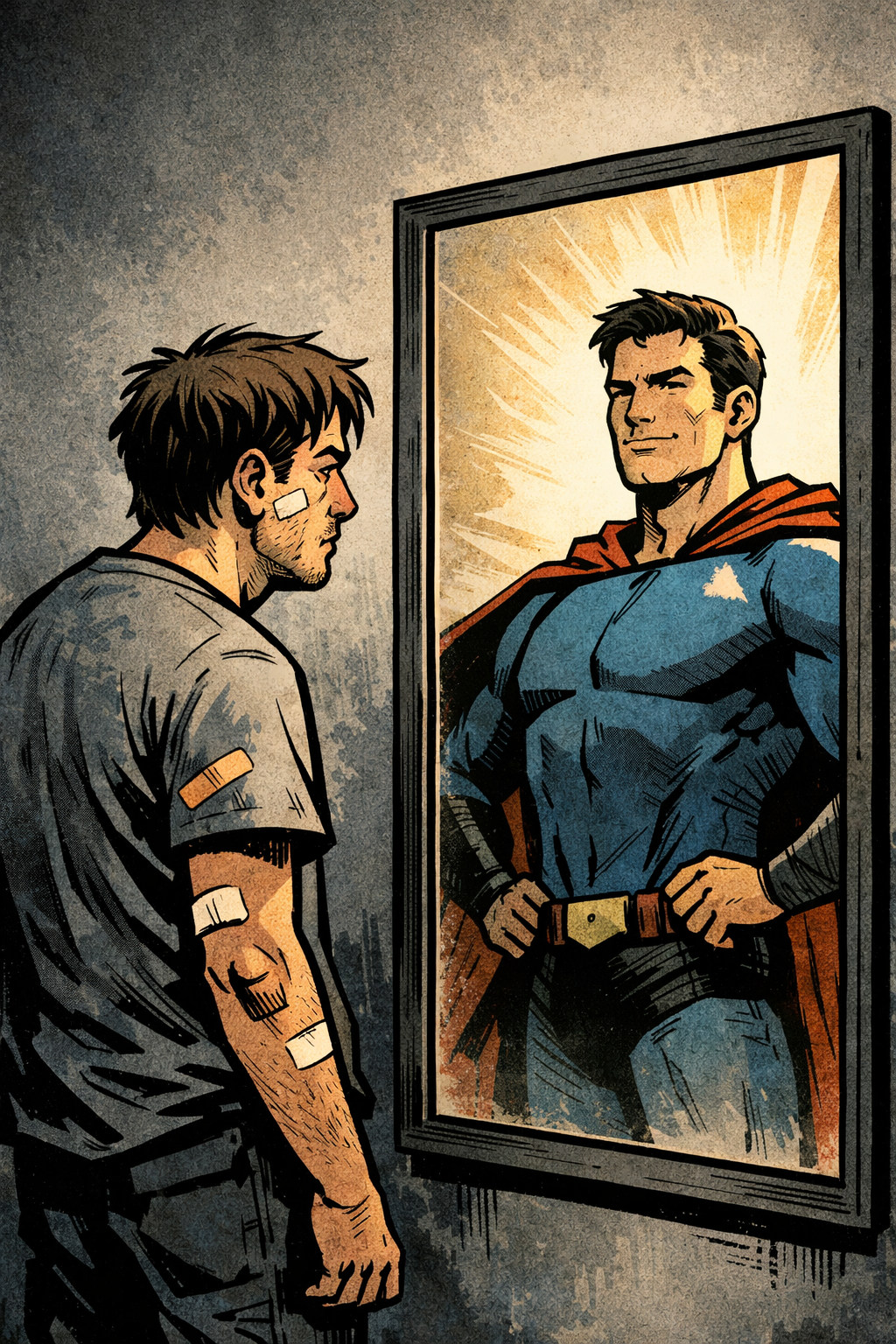
In many organizations, project success is still told through stories of individual sacrifice.
People who work late nights, solve impossible problems at the last minute, hold fragile systems together through sheer competence, dedication, and courage. These individuals are often celebrated as role models.
Yet behind this heroic narrative lies an uncomfortable truth:
when success depends on a few heroes, the organization has already failed.
Not necessarily in financial terms, and not always immediately.
But it has failed as a system.
The Cult of the Hero at Work
Heroes usually emerge where systems are weak.
They appear when processes are unclear, responsibilities are poorly defined, decision-making is centralized, and collaboration is more declared than practiced. In such environments, extraordinary individuals compensate for structural deficiencies. They step in where the organization cannot.
This behavior is often rewarded culturally, even if not formally. The hero becomes the one who “gets things done,” the person everyone calls when something breaks. Over time, heroism is mistaken for excellence.
But heroism is not a strategy.
It is a warning signal.
Success That Depends on a Few Is Not Real Success
A success achieved through extraordinary individual effort is, by definition, not repeatable.
Organizations that rely on heroes typically operate at the lowest levels of organizational maturity, as described by models such as Capability Maturity Model Integration (CMMI). Results are achieved not because the system works, but despite the system.
In these organizations:
- knowledge is concentrated in a few individuals
- practices are inconsistent or undocumented
- quality depends on people, not on processes
- improvement relies on goodwill rather than structure
The system does not learn.
It survives.
Mature Organizations Work Differently
Mature organizations achieve results without requiring heroics.
Not because people are less talented, but because talent is supported by the system.
They operate through shared values, clear principles, consistent methods, and well-established practices. Responsibilities are distributed, collaboration is encouraged, and learning is continuous. Success becomes predictable and sustainable.
In these environments:
- value creation does not depend on individuals
- competence is spread, not concentrated
- failure is treated as feedback
- improvement is systemic
The organization performs even when people change.
The Hero Is Not the Problem
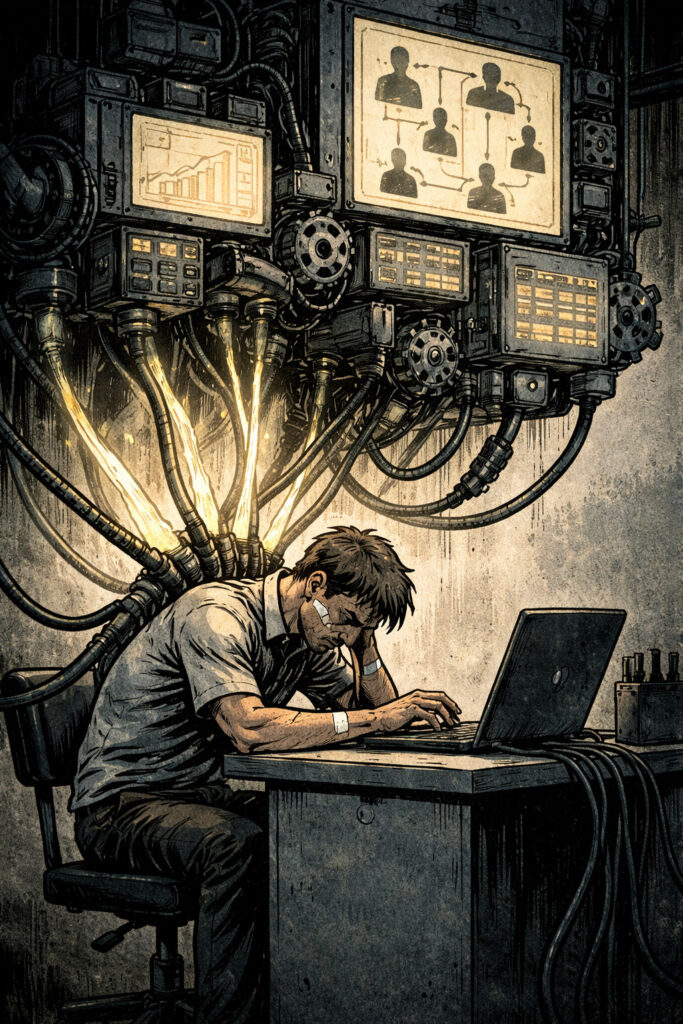
The paradox is that heroes are rarely the problem.
They are often passionate professionals who care deeply about their work. They believe in the product, the project, or even the organization more than the organization believes in itself. They step in because they want things to succeed.
But by compensating for systemic weaknesses, heroes unintentionally allow the system to remain unchanged. The organization becomes dependent on them. Their effort masks deeper problems and delays necessary transformation.
What looks like commitment slowly turns into fragility.
From Dedication to Disillusionment
Over time, the cost becomes visible.
Heroes are rarely rewarded proportionally to the value they generate. Their contributions are evaluated through individual performance metrics that fail to reflect systemic impact. Structural problems remain unaddressed, while expectations keep rising.
Dedication turns into exhaustion.
Pride turns into frustration.
Passion turns into disillusionment.
Eventually, many of these individuals leave. When they do, the organization loses not just a skilled professional, but also knowledge, stability, and continuity. And instead of fixing the system, it looks for the next hero.
The Real Limit Is Organizational Capability
There is a simple principle that organizations often ignore:
the results of an organization do not exceed the capability of the organization itself.
If better results are needed, asking people to work harder is not the answer. The system must improve:
- leadership models
- decision-making structures
- collaboration mechanisms
- performance evaluation
- organizational culture
Only then does individual talent stop being a sacrifice and become shared value.
Conclusion
A truly effective organization does not eliminate heroes.
It frees them.
It transforms solitary saviors into professionals who grow alongside others, within a system that does not need to be rescued every day to function.
Because a company built on heroes is not an excellent company.
It is a company that has not yet learned how to work.
Comments are closed